
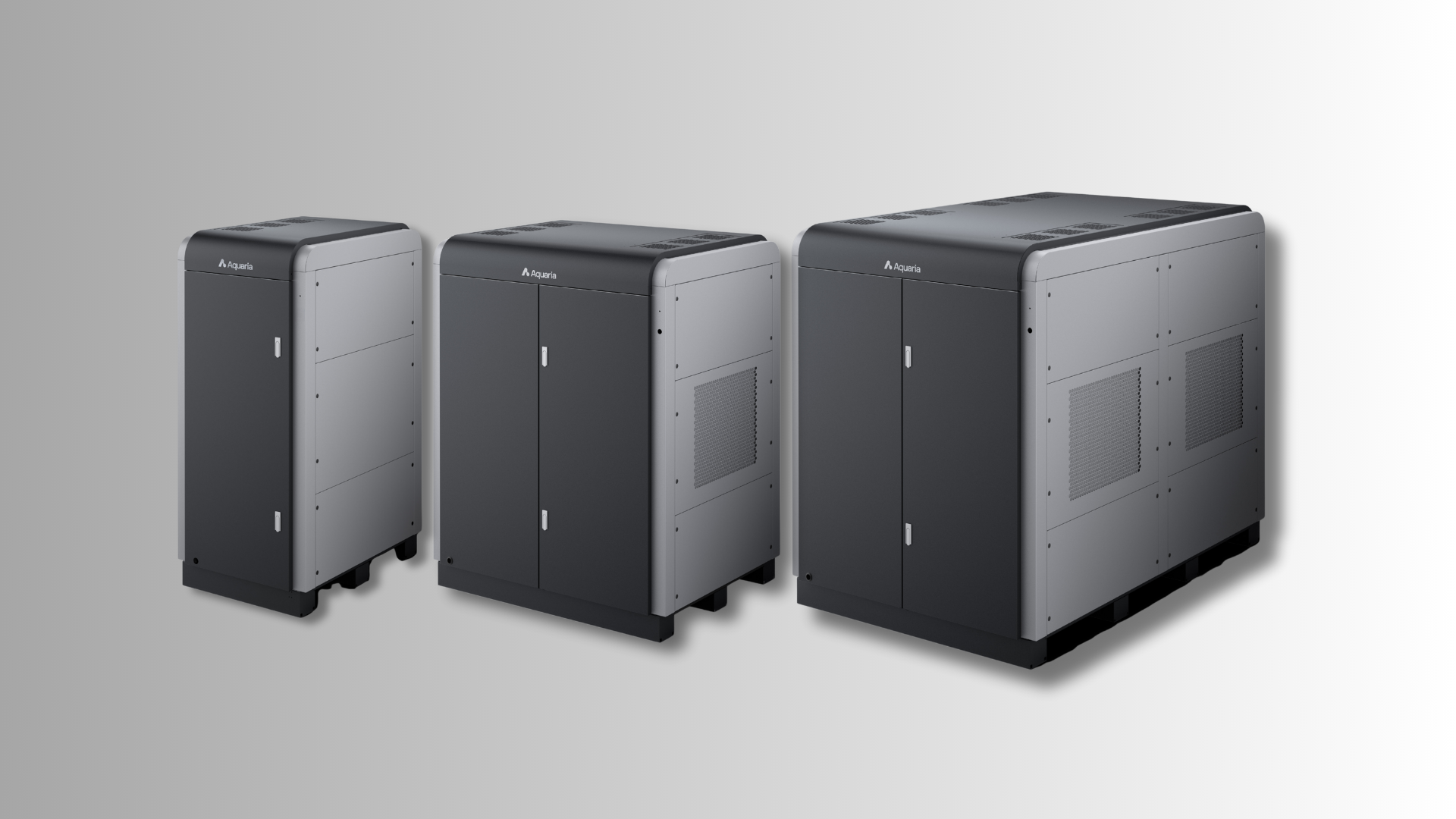
The best atmospheric water generator (AWG) for your needs depends on your daily water volume needs:
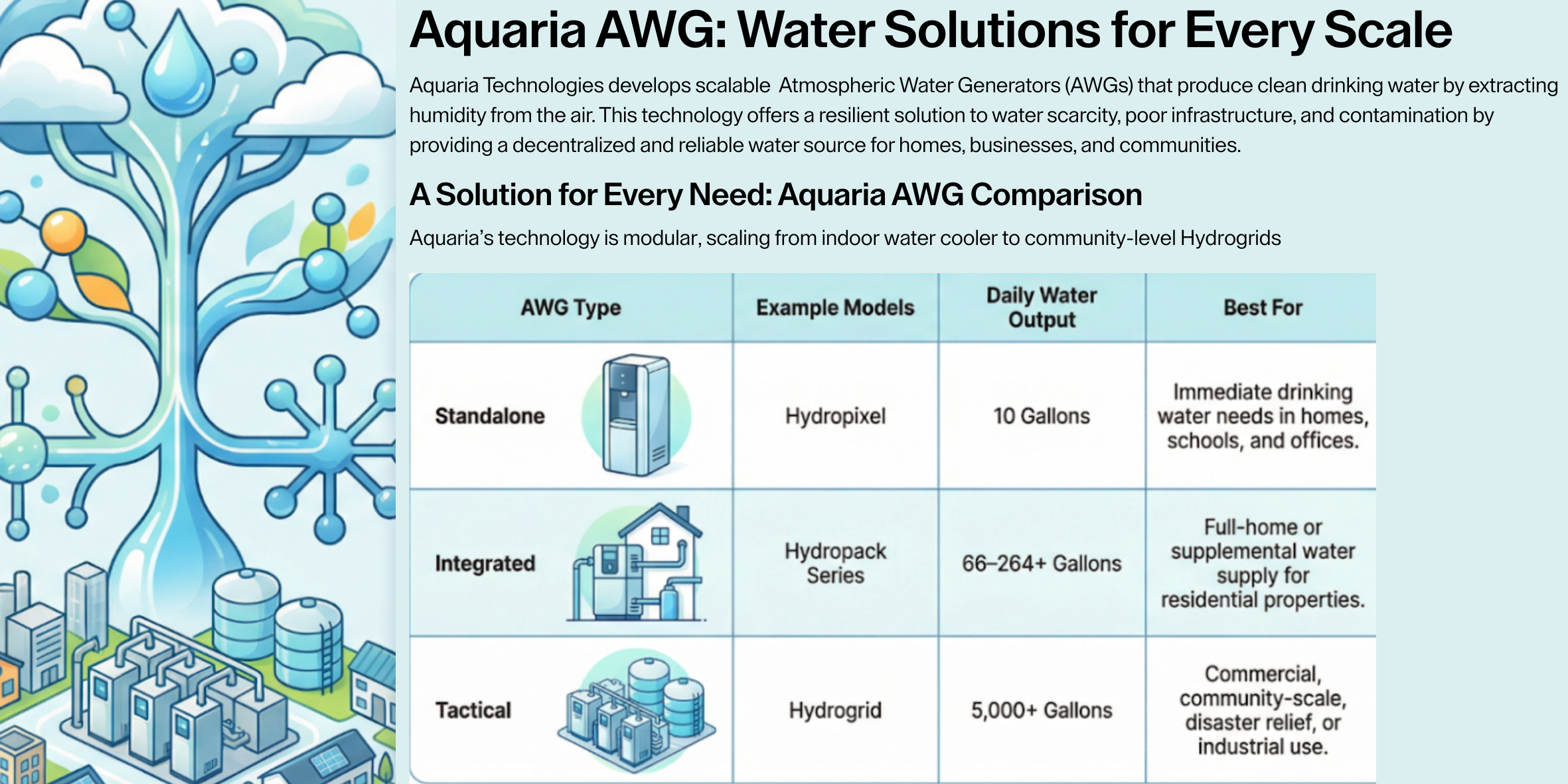
- Standalone AWG units (like coolers or pitchers) plug into wall outlets and provide about 10–24 gallons of drinking water daily
- Integrated AWG systems like Aquaria’s Hydropack line can produce about 66–264 gallons per day, depending on weather conditions – enough to supply water for a whole home. These units are tied into residential plumbing and electrical systems, hence the term “integrated”.
- Tactical AWGs are designed for large-scale water production, and are typically used for military or emergency response use, and are often containerized
What are Atmospheric Water Generators?
An atmospheric water generator is a device that extracts clean, potable water from ambient humidity. As global water infrastructure faces an estimated $1 trillion maintenance bill and nearly 30% of the U.S. experiences drought, the shift toward decentralized water is accelerating. Atmospheric Water Generation (AWG) has emerged as a frontline technology for climate adaptation, but not all systems are engineered for the same purpose (source: EPA).
1. Standalone AWGs: Point-of-Use Drinking Water
Standalone units are designed for immediate, decentralized access to high-quality drinking water without the need for complex plumbing or existing infrastructure.
- How it works: These units typically operate as "plug-and-play" systems. A prime example is the Hydropixel, which produces approximately 10 gallons per day in typical indoor conditions.
- Best use case: Offices, schools, and homes where the goal is to replace bottled water or low-quality tap water.
- Technical Edge: Because they are situated at the point of use, they eliminate risks associated with aging lead pipes or municipal groundwater contamination like PFAS and microplastics.
2. Integrated AWGs: The "Missing Middle" of Water Infrastructure
While many manufacturers focus on either small drinking water coolers or massive industrial plants, a unique segment has emerged: medium-sized, integrated units designed for whole-home or commercial service.
- The Aquaria Distinction: Aquaria is unique in the market for offering the Hydropack and Hydropack X series. These medium-scale systems (producing about 66-264 gallons per day, depending on ambient conditions) are engineered to supply water throughout a residential or commercial building rather than just a single tap.
- How to integrate an AWG into a home: Unlike standalone units, integrated AWGs can be tied directly into a building’s existing plumbing and electrical systems, storage tanks, or supplemental sources like wells and rainwater catchment systems.
- Scalability: These units are modular. A property owner can start with one unit and "stack" others in parallel to increase capacity as demand grows, much like adding panels to a solar array. This allows homeowners, commercial businesses, or residential developers to unlock land that was previously unbuildable due to a lack of municipal water ties.
3. Tactical AWGs: Industrial, Community Resilience & Military Use
Tactical AWGs are heavy-duty, often containerized systems designed for high-volume output and rapid deployment in challenging environments.
- Hydrogrids: These are networks of linked AWG modules producing in unison. Aquaria’s Hydrogrid can produce over 5,000 gallons per day, enough to support more than 7,000 people in emergency scenarios.
- Tactical Deployment: These systems are optimized for disaster relief or military operations where "water on demand" is a matter of survival
- For example, the Society of American Military Engineers is working on military operations in the Indo-Pacific region.
- Efficiency at Scale: Large-scale tactical units are designed for maximum production density. For instance, a Hydrogrid can achieve a production density of roughly 483.8 L/d/m², nearly double that of smaller residential units.
Frequently Asked Questions
How much water can an integrated AWG produce?
An integrated system using the Aquaria Hydropacks can produce about 66-264 gallons of water per day, depending on ambient conditions, which is more than sufficient for a standard multi-person household's daily usage, including showers and appliances.
Can AWGs work off-grid?
Yes. Because atmospheric water generators (AWGs) generate water from the air, they can be powered by solar arrays or batteries, making them a cornerstone of distributed, off-grid water delivery.
What is the difference between standalone and integrated AWGs?
Standalone AWGs (like the Hydropixel) are portable units for drinking water, wheareas integrated AWGs (like the Hydropack series) are plumbed into a home's infrastructure to provide water for all household needs on demand.
Sources & Further Reading
If you'd like to learn more about military applications of AWGs, see below:
- ERDC partners with industry to advance fuel-efficient water-from-air capabilities, U.S. Army Engineer Research and Development Center
- Atmospheric Water Extraction Plus (AWE+), Triton Systems, Inc - awardee of America's Seed Fund